
First of all Thanks for joining me
” CRICKET ” – THE GENTLEMAN’S GAME…….
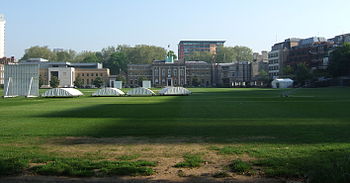
ARTILLERY GROUND
The cricket game underwent major development in the 18th century to become England’s national sport. Its success was underwritten by the twin necessities of patronage and betting. Cricket was prominent in London as early as 1707 and, in the middle years of the century, large crowds flocked to matches on the Artillery Ground in Finsbury. The single wicket form of the sport attracted huge crowds and wagers to match, its popularity peaking in the 1748 season. Bowling underwent an evolution around 1760 when bowlers began to pitch the ball instead of rolling or skimming it towards the batsman. This caused a revolution in bat design because, to deal with the bouncing ball, it was necessary to introduce the modern straight bat in place of the old “hockey stick” shape.
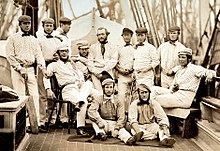
The first English team to tour overseas
Meanwhile, the British Empire had been instrumental in spreading the game overseas and by the middle of the 19th century it had become well established in Australia, the Caribbean, India, New Zealand, North America and South Africa.In 1844, the first-ever international match took place between the United States and Canada. In 1859, a team of English players went to North America on the first overseas tour.
The rise of limited overs cricket
Cricket entered a new era in 1963 when English counties introduced the limited overs variant. As it was sure to produce a result, limited overs cricket was lucrative and the number of matches increased. The first Limited Overs International was played in 1971 and the governing International Cricket Council (ICC), seeing its potential, staged the first limited overs Cricket World Cup in 1975. In the 21st century, a new limited overs form, Twenty20, made an immediate impact. On 22 June 2017, Afghanistan and Ireland became the 11th and 12th ICC full members, enabling them to play Test cricket.
Laws and gameplay

A typical cricket field.
In cricket, the rules of the game are specified in a code called The Laws of Cricket (hereinafter called “the Laws”) which has a global remit. There are 42 Laws (always written with a capital “L”). The earliest known version of the code was drafted in 1744 and, since 1788, it has been owned and maintained by its custodian, the Marylebone Cricket Club (MCC) in London.

 PATEL'S BLOG
nice work…
LikeLike